-
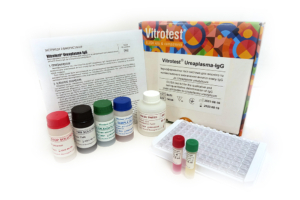
The test kit Vitrotest® Ureaplasma-IgG is an enzyme linked immunosorbent assay (ELISA) for the qualitative and semiquantitative determination of IgG class antibodies to Ureaplasma urealyticum in human serum or plasma.
Determination of IgG antibodies to U.urealyticum in the test kit Vitrotest® Ureaplasma-IgG is based on a solid phase indirect ELISA in a two-step incubation procedure.
○ ТК028 - 96 tests- Solid phase: breakable microplate ELISA is coated with recombinant antigens of U. urealyticum.
- Conjugate: a monoclonal antibodies to human IgG conjugated to horseradish peroxidase.
- Chromogen: ready to use TMB solution.
- Volume of sample for analysis: 20 μl.
- Assay time: 1h 15 min.
The microorganism Ureaplasma urealyticum causes inflammatory diseases of the human genitourinary system and Ureaplasma is often found in women with vaginitis and cystitis.
Penetration of the pathogen into the upper parts of the reproductive system can lead to the disruption of the reproductive functions. In men, U.urealyticum is the cause of nongonococcal urethritis and prostatitis (up to 50% of cases). The role of ureaplasmas in the development of most cases of urolithiasis has been proven. Often U.urealyticum leads to postpartum sepsis in women.
To diagnose ureaplasmosis, both direct methods for identifying ureaplasmas (polymerase chain reaction, immunofluorescence reaction, isolation of pure culture) and serological methods for detecting antibodies specific to Ureaplasma urealyticum are applied. Determination of antibodies in enzyme immunoassay is especially important in chronic ureaplasmosis, as well as in ascending ureaplasma infection. ELISA is a minimally invasive research method that allows for a comprehensive diagnosis of urogenital diseases. -
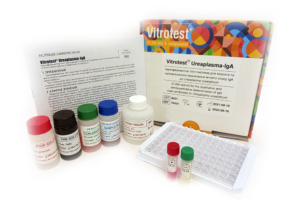
The test kit Vitrotest® Ureaplasma-IgA is an enzyme linked immunosorbent assay (ELISA) for the qualitative and semiquantitative determination of IgA class antibodies to Ureaplasma urealyticum in human serum or plasma.
Determination of IgA antibodies to U.urealyticum in the test kit Vitrotest® Ureaplasma-IgA is based on a solid phase indirect ELISA in a two-step incubation procedure.
○ ТК029 - 96 tests- Solid phase: breakable microplate ELISA is coated with recombinant antigens of U. urealyticum.
- Conjugate: a monoclonal antibodies to human IgA conjugated to horseradish peroxidase.
- Chromogen: ready to use TMB solution.
- Volume of sample for analysis: 20 μl.
- Assay time: 1h 15 min.
The microorganism Ureaplasma urealyticum causes inflammatory diseases of the human genitourinary system and Ureaplasma is often found in women with vaginitis and cystitis.
Penetration of the pathogen into the upper parts of the reproductive system can lead to the disruption of the reproductive functions. In men, U.urealyticum is the cause of nongonococcal urethritis and prostatitis (up to 50% of cases). The role of ureaplasmas in the development of most cases of urolithiasis has been proven. Often U.urealyticum leads to postpartum sepsis in women.
To diagnose ureaplasmosis, both direct methods for identifying ureaplasmas (polymerase chain reaction, immunofluorescence reaction, isolation of pure culture) and serological methods for detecting antibodies specific to Ureaplasma urealyticum are applied. Determination of antibodies in enzyme immunoassay is especially important in chronic ureaplasmosis, as well as in ascending ureaplasma infection. ELISA is a minimally invasive research method that allows for a comprehensive diagnosis of urogenital diseases. -
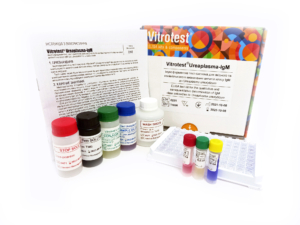
The test kit Vitrotest® Ureaplasma-IgМ is an enzyme linked immunosorbent assay (ELISA) for the qualitative and semiquantitative determination of IgM class antibodies to Ureaplasma urealiticum in human serum or plasma.
Determination of IgM antibodies to Ureaplasma urealiticum in the test kit Vitrotest® Ureaplasma-IgМ is based on a solid phase, «IgM-capture» ELISA in a two-step incubation procedure.
○ ТК096 - 96 tests- Solid phase: breakable microplate ELISA is coated with monoclonal anti-IgM antibodies.
- Conjugate: recombinant U. urealiticum antigen, conjugated to horseradish peroxidase.
- Chromogen: ready to use TMB solution.
- Volume of sample for analysis: 10 μl.
- Assay time: 1h 30 min.
The microorganism Ureaplasma urealyticum causes inflammatory diseases of the human genitourinary system and Ureaplasma is often found in women with vaginitis and cystitis.
Penetration of the pathogen into the upper parts of the reproductive system can lead to the disruption of the reproductive functions. In men, U.urealyticum is the cause of nongonococcal urethritis and prostatitis (up to 50% of cases). The role of ureaplasmas in the development of most cases of urolithiasis has been proven. Often U.urealyticum leads to postpartum sepsis in women.
To diagnose ureaplasmosis, both direct methods for identifying ureaplasmas (polymerase chain reaction, immunofluorescence reaction, isolation of pure culture) and serological methods for detecting antibodies specific to Ureaplasma urealyticum are applied. Determination of antibodies in enzyme immunoassay is especially important in chronic ureaplasmosis, as well as in ascending ureaplasma infection. ELISA is a minimally invasive research method that allows for a comprehensive diagnosis of urogenital diseases. -
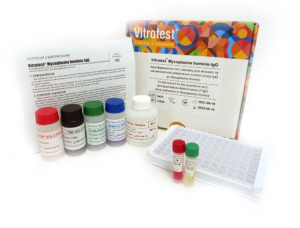
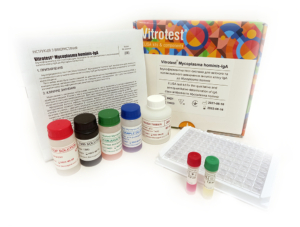
The test kit Vitrotest® Mycoplasma hominis-IgG is an enzyme linked immunosorbent assay (ELISA) for the qualitative and semiquantitative determination of IgG class antibodies to Mycoplasma hominis in human serum or plasma.
Determination of IgG antibodies to M. hominis in the test kit Vitrotest® Mycoplasma hominis-IgG is based on a solid phase indirect ELISA in a two-step incubation procedure.
○ ТК024 - 96 tests- Solid phase: breakable microplate ELISA is coated with native Mycoplasma hominis antigens.
- Conjugate: a monoclonal antibodies to human IgG conjugated to horseradish peroxidase.
- Chromogen: ready to use TMB solution.
- Volume of sample for analysis: 10 μl.
- Assay time: 1h 15 min.
Mycoplasmas are opportunistic pathogens, since they are often detected as part of the normal human microflora. At the same time, these microorganisms may be involved in the inflammatory process during urogenital diseases. Data on the frequency of mycoplasma spread among the population of different countries are contradictory, and infection rates vary from 10 to 80%.
Mycoplasma hominis infects primarily the organs of the genitourinary system and causes various destructive inflammatory processes. In men, M. hominis usually causes urethritis and prostatitis, and in women is provokes urethritis, cervicitis and inflammatory lesions of the pelvic organs. Urogenital mycoplasmosis in pregnant women is especially dangerous, as it can cause miscarriage, premature birth, infection of the fetus and the development of postpartum sepsis.
Clinical manifestations caused by the presence of M. hominis are often similar to symptoms of other diseases of the urogenital tract of bacterial, viral and other etiologies. Therefore, for successful diagnosis of urogenital mycoplasmosis, laboratory tests are required to differentiate them.
Serological methods for diagnosing mycoplasmosis include precipitation and immunofluorescence reactions. To detect serum antibodies to M. hominis, a passive hemagglutination reaction and an enzyme-linked immunosorbent assay are used, which makes it possible to determine the stage and nature of the disease. This is especially important in chronic disease. The presence of IgG antibodies to M. hominis reflects the overall picture of the immune response as a result of prolonged or previous infection. In the latter case, IgG may remain at low levels for many years. -
The test kit Vitrotest® Mycoplasma hominis-IgA is an enzyme linked immunosorbent assay (ELISA) for the qualitative and semiquantitative determination of IgA class antibodies to Mycoplasma hominis in human serum or plasma.
Determination of IgA antibodies to M. hominis in the test kit Vitrotest® Mycoplasma hominis-IgA is based on a solid phase indirect ELISA in a two-step incubation procedure.
○ ТК025 - 96 tests- Solid phase: breakable microplate ELISA is coated with native Mycoplasma hominis antigens.
- Conjugate: a monoclonal antibodies to human IgA conjugated to horseradish peroxidase.
- Chromogen: ready to use TMB solution.
- Volume of sample for analysis: 10 μl.
- Assay time: 1h 15 min.
Mycoplasmas are opportunistic pathogens, since they are often detected as part of the normal human microflora. At the same time, these microorganisms may be involved in the inflammatory process during urogenital diseases. Data on the frequency of mycoplasma spread among the population of different countries are contradictory, and infection rates vary from 10 to 80%.
Mycoplasma hominis infects primarily the organs of the genitourinary system and causes various destructive inflammatory processes. In men, M. hominis usually causes urethritis and prostatitis, and in women is provokes urethritis, cervicitis and inflammatory lesions of the pelvic organs. Urogenital mycoplasmosis in pregnant women is especially dangerous, as it can cause miscarriage, premature birth, infection of the fetus and the development of postpartum sepsis.
Clinical manifestations caused by the presence of M. hominis are often similar to symptoms of other diseases of the urogenital tract of bacterial, viral and other etiologies. Therefore, for successful diagnosis of urogenital mycoplasmosis, laboratory tests are required to differentiate them.
Serological methods for diagnosing mycoplasmosis include precipitation and immunofluorescence reactions. To detect serum antibodies to M. hominis, a passive hemagglutination reaction and an enzyme-linked immunosorbent assay are used, which makes it possible to determine the stage and nature of the disease. This is especially important in chronic disease. The presence of IgG antibodies to M. hominis reflects the overall picture of the immune response as a result of prolonged or previous infection. In the latter case, IgG may remain at low levels for many years.
-
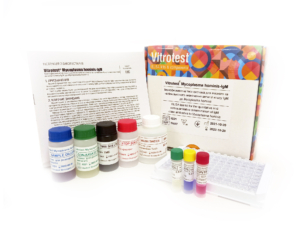
The test kit Vitrotest® Mycoplasma hominis-IgM is an enzyme linked immunosorbent assay (ELISA) for the qualitative and semiquantitative determination of IgM class antibodies to Mycoplasma hominis in human serum or plasma.
Determination of IgM antibodies to Mycoplasma hominis in the test kit Vitrotest® Mycoplasma hominis-IgM is based on a solid phase, «IgM-capture» ELISA in a two-step incubation procedure.
○ ТК097 - 96 tests- Solid phase: breakable microplate ELISA is coated with monoclonal anti-IgM antibodies.
- Conjugate: recombinant M. hominis antigen, conjugated to horseradish peroxidase.
- Chromogen: ready to use TMB solution.
- Volume of sample for analysis: 10 μl.
- Assay time: 1h 30 min.
Mycoplasmas are opportunistic pathogens, since they are often detected as part of the normal human microflora. At the same time, these microorganisms may be involved in the inflammatory process during urogenital diseases. Data on the frequency of mycoplasma spread among the population of different countries are contradictory, and infection rates vary from 10 to 80%.
Mycoplasma hominis infects primarily the organs of the genitourinary system and causes various destructive inflammatory processes. In men, M. hominis usually causes urethritis and prostatitis, and in women is provokes urethritis, cervicitis and inflammatory lesions of the pelvic organs. Urogenital mycoplasmosis in pregnant women is especially dangerous, as it can cause miscarriage, premature birth, infection of the fetus and the development of postpartum sepsis.
Clinical manifestations caused by the presence of M. hominis are often similar to symptoms of other diseases of the urogenital tract of bacterial, viral and other etiologies. Therefore, for successful diagnosis of urogenital mycoplasmosis, laboratory tests are required to differentiate them.
Serological methods for diagnosing mycoplasmosis include precipitation and immunofluorescence reactions. To detect serum antibodies to M. hominis, a passive hemagglutination reaction and an enzyme-linked immunosorbent assay are used, which makes it possible to determine the stage and nature of the disease. This is especially important in chronic disease. The presence of IgG antibodies to M. hominis reflects the overall picture of the immune response as a result of prolonged or previous infection. In the latter case, IgG may remain at low levels for many years. -
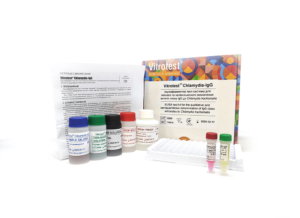
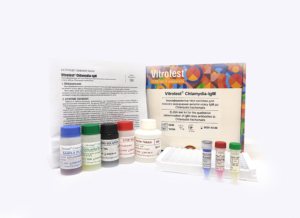
The test kit Vitrotest® Chlamydia-IgG is an enzyme linked immunosorbent assay (ELISA) for the qualitative and semiquantitative determination of IgG class antibodies to Chlamydia trachomatis in human serum or plasma.
Determination of IgG antibodies to Chlamydia trachomatis in the test kit Vitrotest® Chlamydia-IgG is based on a solid phase indirect ELISA in a two-step incubation procedure.
○ ТК014 - 96 tests- Solid phase: breakable microplate ELISA is coated with recombinant Chlamydia trachomatis antigens.
- Conjugate: a monoclonal antibodies to human IgG conjugated to horseradish peroxidase.
- Chromogen: ready to use TMB solution.
- Volume of sample for analysis: 20 μl.
- Assay time: 1h 15 min.
Chlamydiosis is a common sexually transmitted disease (STD) caused by infection with a Gram-negative bacteria Chlamydia trachomatis. The family Chlamydiaceae contains besides C.trachomatis two important pathogenic species, C. psittaci and C.pneumoniae.
The importance of C.trachomatis as a sexually transmitted agent became apparent in the mid-1970-s, with reports of pelvic inflammatory disease (PID), endometritis and salpingitis, resulting in ectopic pregnancy and infertility, as well as conjunctivitis (paratrachoma) and pneumonia of the newborns. In men, untreated chlamydial infections can lead to urethritis and epididymoorchitis, and primarily in men, chlamydiosis is known to cause autoimmune disease, reactive arthritis. Besides these conditions, in poor developing countries C.trachomatis could cause trachoma, a specific ocular disease, which is one of the leading causes of blindness, as well as systemic sexually transmitted disease called lymphogranuloma venereum (LGV).
C.trachomatis develops in biphasic cycle. The bacterium is normally found in two highly specialized morphologic forms — the extracellular, metabolically inactive, infectious elementary body (EB) and the metabolically active, dividing, non-infective intracellular form known as reticulate body (RB). The infectious EB enters the mucosal host cells via endocytosis. Inside endosome EBs reorganize into RBs. RBs divide by binary fission, filling the endosome with hundreds of RBs. Multiplication ceases after 48 – 72 h, and RBs transform into metabolically inactive infectious EBs. The EBs are released from the cell by cell rupture or exocytosis, and target new host cells. In women, C.trachomatis infection may involve not only cervix, but also endometrium and fallopian tubes in around 10% of individuals. The disease sequelae caused by this process include PID and its complications. After PID has occurred, even with treatment, it could cause significant reproductive and gynaecological morbidity, including infertility, ectopic pregnancy, and chronic pelvic pain. In one study, 18% of women developed infertility after clinically diagnosed single episode of PID; the risk of infertility increases considerably after every new episode of PID.
Infertility or subfertility are the result of damage to the cilia lining the fallopian tubes, fallopian tube blockage or closure, or adhesion formation among pelvic organs. The issue of whether chlamydial PID is a consequence of persistent infection, immunopathology, or autoimmune reaction remains unresolved. C.trachomatis can also spread perinatally from an untreated mother to her baby during childbirth, resulting in paratrachoma, urethritis, proctitis, nasopharyngeal infection or pneumonia in many exposed infants. The risk of neonatal chlamydiosis in children born through an infected birth canal is around 15%. Conjunctival infections are detected within the first 22 days of life, eventually followed by nasopharyngeal infections and pneumonia, rectal and vaginal infections during the first several month of life.
Chlamydiosis is known as a ‘silent’ infection because most infected people, especially women, are asymptomatic and lack abnormal physical examination findings. Unfortunately, there might not be a relationship between the severity of symptoms and the severity of the disease. The symptoms of cervicitis may appear 1-3 weeks after infection, and may include mucopurulent endocervical discharge and easily induced endocervical bleeding; if cervicitis develops into PID, abdominal and/or pelvic pain could arise.
C.trachomatis is transmitted if infected secretions from urethra, cervix, rectum, conjunctivae and throat come into contact with mucous membranes of the above-mentioned organs. Chlamydiosis is usually transmitted by sex. Therefore, young people (up to 25 years) are at highest risk of acquiring chlamydiosis. In addition, an infected mother can infect her baby during vaginal delivery. C.trachomatis is grouped into 18 separate serovars, which are distinguished by the antigenic and molecular polymorphism within major outer membrane protein, OmpA. Serovars A-C infect the conjunctive epithelium and lead to ocular infections that can progress to trachoma; serovars L1-L3 are able to infect not only the genital epithelium, but also monocytes and lead to LGV; classical sexually transmitted non-LGV infections are caused by serovars D-K. Protective immunity to chlamydiosis is not absolute, being much stronger to the same serovar; therefore, reinfections are usually by the heterologous serovar. -
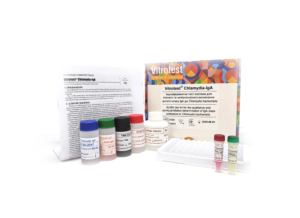
The test kit Vitrotest® Chlamydia-IgА is an enzyme linked immunosorbent assay (ELISA) for the qualitative and semiquantitative determination of IgА class antibodies to Chlamydia trachomatis in human serum or plasma.
Determination of IgА antibodies to Chlamydia trachomatis in the test kit Vitrotest® Chlamydia-IgА is based on a solid phase indirect ELISA in a two-step incubation procedure.
○ ТК015 - 96 tests- Solid phase: breakable microplate ELISA is coated with recombinant Chlamydia trachomatis antigens.
- Conjugate: a monoclonal antibodies to human IgА conjugated to horseradish peroxidase.
- Chromogen: ready to use TMB solution.
- Volume of sample for analysis: 20 μl.
- Assay time: 1h 15 min.
Chlamydiosis is a common sexually transmitted disease (STD) caused by infection with a Gram-negative bacteria Chlamydia trachomatis. The family Chlamydiaceae contains besides C.trachomatis two important pathogenic species, C. psittaci and C.pneumoniae.
The importance of C.trachomatis as a sexually transmitted agent became apparent in the mid-1970-s, with reports of pelvic inflammatory disease (PID), endometritis and salpingitis, resulting in ectopic pregnancy and infertility, as well as conjunctivitis (paratrachoma) and pneumonia of the newborns. In men, untreated chlamydial infections can lead to urethritis and epididymoorchitis, and primarily in men, chlamydiosis is known to cause autoimmune disease, reactive arthritis. Besides these conditions, in poor developing countries C.trachomatis could cause trachoma, a specific ocular disease, which is one of the leading causes of blindness, as well as systemic sexually transmitted disease called lymphogranuloma venereum (LGV).
C.trachomatis develops in biphasic cycle. The bacterium is normally found in two highly specialized morphologic forms — the extracellular, metabolically inactive, infectious elementary body (EB) and the metabolically active, dividing, non-infective intracellular form known as reticulate body (RB). The infectious EB enters the mucosal host cells via endocytosis. Inside endosome EBs reorganize into RBs. RBs divide by binary fission, filling the endosome with hundreds of RBs. Multiplication ceases after 48 – 72 h, and RBs transform into metabolically inactive infectious EBs. The EBs are released from the cell by cell rupture or exocytosis, and target new host cells. In women, C.trachomatis infection may involve not only cervix, but also endometrium and fallopian tubes in around 10% of individuals. The disease sequelae caused by this process include PID and its complications. After PID has occurred, even with treatment, it could cause significant reproductive and gynaecological morbidity, including infertility, ectopic pregnancy, and chronic pelvic pain. In one study, 18% of women developed infertility after clinically diagnosed single episode of PID; the risk of infertility increases considerably after every new episode of PID.
Infertility or subfertility are the result of damage to the cilia lining the fallopian tubes, fallopian tube blockage or closure, or adhesion formation among pelvic organs. The issue of whether chlamydial PID is a consequence of persistent infection, immunopathology, or autoimmune reaction remains unresolved. C.trachomatis can also spread perinatally from an untreated mother to her baby during childbirth, resulting in paratrachoma, urethritis, proctitis, nasopharyngeal infection or pneumonia in many exposed infants. The risk of neonatal chlamydiosis in children born through an infected birth canal is around 15%. Conjunctival infections are detected within the first 22 days of life, eventually followed by nasopharyngeal infections and pneumonia, rectal and vaginal infections during the first several month of life.
Chlamydiosis is known as a ‘silent’ infection because most infected people, especially women, are asymptomatic and lack abnormal physical examination findings. Unfortunately, there might not be a relationship between the severity of symptoms and the severity of the disease. The symptoms of cervicitis may appear 1-3 weeks after infection, and may include mucopurulent endocervical discharge and easily induced endocervical bleeding; if cervicitis develops into PID, abdominal and/or pelvic pain could arise.
C.trachomatis is transmitted if infected secretions from urethra, cervix, rectum, conjunctivae and throat come into contact with mucous membranes of the above-mentioned organs. Chlamydiosis is usually transmitted by sex. Therefore, young people (up to 25 years) are at highest risk of acquiring chlamydiosis. In addition, an infected mother can infect her baby during vaginal delivery. C.trachomatis is grouped into 18 separate serovars, which are distinguished by the antigenic and molecular polymorphism within major outer membrane protein, OmpA. Serovars A-C infect the conjunctive epithelium and lead to ocular infections that can progress to trachoma; serovars L1-L3 are able to infect not only the genital epithelium, but also monocytes and lead to LGV; classical sexually transmitted non-LGV infections are caused by serovars D-K. Protective immunity to chlamydiosis is not absolute, being much stronger to the same serovar; therefore, reinfections are usually by the heterologous serovar. -
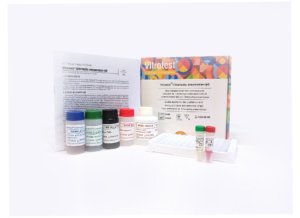
The test kit Vitrotest® Chlamydia-IgМ is an enzyme linked immunosorbent assay (ELISA) for the qualitative determination of IgM class antibodies to Chlamydia trachomatis in human serum or plasma.
Determination of IgM antibodies to Chlamydia trachomatis in the test kit Vitrotest® Chlamydia-IgМ is based on a solid phase «IgM-capture» ELISA in a two-step incubation procedure.
○ ТК036 - 96 tests- Solid phase: breakable microplate ELISA is coated with monoclonal anti-IgM antibodies.
- Conjugate: recombinant antigen MOMP of Chlamydia trachomatis, conjugated to horseradish peroxidase.
- Chromogen: ready to use TMB solution.
- Volume of sample for analysis: 10 μl.
- Assay time: 1h 30 min.
Chlamydiosis is a common sexually transmitted disease (STD) caused by infection with a Gram-negative bacteria Chlamydia trachomatis. The family Chlamydiaceae contains besides C.trachomatis two important pathogenic species, C. psittaci and C.pneumoniae.
The importance of C.trachomatis as a sexually transmitted agent became apparent in the mid-1970-s, with reports of pelvic inflammatory disease (PID), endometritis and salpingitis, resulting in ectopic pregnancy and infertility, as well as conjunctivitis (paratrachoma) and pneumonia of the newborns. In men, untreated chlamydial infections can lead to urethritis and epididymoorchitis, and primarily in men, chlamydiosis is known to cause autoimmune disease, reactive arthritis. Besides these conditions, in poor developing countries C.trachomatis could cause trachoma, a specific ocular disease, which is one of the leading causes of blindness, as well as systemic sexually transmitted disease called lymphogranuloma venereum (LGV).
C.trachomatis develops in biphasic cycle. The bacterium is normally found in two highly specialized morphologic forms — the extracellular, metabolically inactive, infectious elementary body (EB) and the metabolically active, dividing, non-infective intracellular form known as reticulate body (RB). The infectious EB enters the mucosal host cells via endocytosis. Inside endosome EBs reorganize into RBs. RBs divide by binary fission, filling the endosome with hundreds of RBs. Multiplication ceases after 48 – 72 h, and RBs transform into metabolically inactive infectious EBs. The EBs are released from the cell by cell rupture or exocytosis, and target new host cells. In women, C.trachomatis infection may involve not only cervix, but also endometrium and fallopian tubes in around 10% of individuals. The disease sequelae caused by this process include PID and its complications. After PID has occurred, even with treatment, it could cause significant reproductive and gynaecological morbidity, including infertility, ectopic pregnancy, and chronic pelvic pain. In one study, 18% of women developed infertility after clinically diagnosed single episode of PID; the risk of infertility increases considerably after every new episode of PID.
Infertility or subfertility are the result of damage to the cilia lining the fallopian tubes, fallopian tube blockage or closure, or adhesion formation among pelvic organs. The issue of whether chlamydial PID is a consequence of persistent infection, immunopathology, or autoimmune reaction remains unresolved. C.trachomatis can also spread perinatally from an untreated mother to her baby during childbirth, resulting in paratrachoma, urethritis, proctitis, nasopharyngeal infection or pneumonia in many exposed infants. The risk of neonatal chlamydiosis in children born through an infected birth canal is around 15%. Conjunctival infections are detected within the first 22 days of life, eventually followed by nasopharyngeal infections and pneumonia, rectal and vaginal infections during the first several month of life.
Chlamydiosis is known as a ‘silent’ infection because most infected people, especially women, are asymptomatic and lack abnormal physical examination findings. Unfortunately, there might not be a relationship between the severity of symptoms and the severity of the disease. The symptoms of cervicitis may appear 1-3 weeks after infection, and may include mucopurulent endocervical discharge and easily induced endocervical bleeding; if cervicitis develops into PID, abdominal and/or pelvic pain could arise.
C.trachomatis is transmitted if infected secretions from urethra, cervix, rectum, conjunctivae and throat come into contact with mucous membranes of the above-mentioned organs. Chlamydiosis is usually transmitted by sex. Therefore, young people (up to 25 years) are at highest risk of acquiring chlamydiosis. In addition, an infected mother can infect her baby during vaginal delivery. C.trachomatis is grouped into 18 separate serovars, which are distinguished by the antigenic and molecular polymorphism within major outer membrane protein, OmpA. Serovars A-C infect the conjunctive epithelium and lead to ocular infections that can progress to trachoma; serovars L1-L3 are able to infect not only the genital epithelium, but also monocytes and lead to LGV; classical sexually transmitted non-LGV infections are caused by serovars D-K. Protective immunity to chlamydiosis is not absolute, being much stronger to the same serovar; therefore, reinfections are usually by the heterologous serovar. -
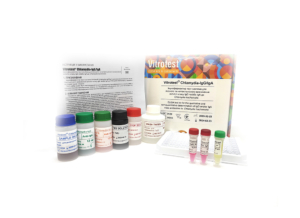
The test kit Vitrotest® Chlamydia-IgG/IgA is an enzyme linked immunosorbent assay (ELISA) for the qualitative and semiquantitative determination of IgG and/or IgА class antibodies to Chlamydia trachomatis in human serum or plasma.
Determination of IgG and/or IgА antibodies to Chlamydia trachomatis in the test kit Vitrotest® Chlamydia-IgG/IgA is based on a solid phase indirect ELISA in a two-step incubation procedure.
○ ТК013 - 96 tests- Solid phase: breakable microplate ELISA is coated with recombinant Chlamydia trachomatis antigens.
- Conjugate anti-IgG: a monoclonal antibodies to human IgG conjugated to horseradish peroxidase.
- Conjugate anti-IgA: a monoclonal antibodies to human IgA conjugated to horseradish peroxidase.
- Chromogen: ready to use TMB solution.
- Volume of sample for analysis: 20 μl.
- Assay time: 1h 15 min.
Chlamydiosis is a common sexually transmitted disease (STD) caused by infection with a Gram-negative bacteria Chlamydia trachomatis. The family Chlamydiaceae contains besides C.trachomatis two important pathogenic species, C. psittaci and C.pneumoniae.
The importance of C.trachomatis as a sexually transmitted agent became apparent in the mid-1970-s, with reports of pelvic inflammatory disease (PID), endometritis and salpingitis, resulting in ectopic pregnancy and infertility, as well as conjunctivitis (paratrachoma) and pneumonia of the newborns. In men, untreated chlamydial infections can lead to urethritis and epididymoorchitis, and primarily in men, chlamydiosis is known to cause autoimmune disease, reactive arthritis. Besides these conditions, in poor developing countries C.trachomatis could cause trachoma, a specific ocular disease, which is one of the leading causes of blindness, as well as systemic sexually transmitted disease called lymphogranuloma venereum (LGV).
C.trachomatis develops in biphasic cycle. The bacterium is normally found in two highly specialized morphologic forms — the extracellular, metabolically inactive, infectious elementary body (EB) and the metabolically active, dividing, non-infective intracellular form known as reticulate body (RB). The infectious EB enters the mucosal host cells via endocytosis. Inside endosome EBs reorganize into RBs. RBs divide by binary fission, filling the endosome with hundreds of RBs. Multiplication ceases after 48 – 72 h, and RBs transform into metabolically inactive infectious EBs. The EBs are released from the cell by cell rupture or exocytosis, and target new host cells. In women, C.trachomatis infection may involve not only cervix, but also endometrium and fallopian tubes in around 10% of individuals. The disease sequelae caused by this process include PID and its complications. After PID has occurred, even with treatment, it could cause significant reproductive and gynaecological morbidity, including infertility, ectopic pregnancy, and chronic pelvic pain. In one study, 18% of women developed infertility after clinically diagnosed single episode of PID; the risk of infertility increases considerably after every new episode of PID.
Infertility or subfertility are the result of damage to the cilia lining the fallopian tubes, fallopian tube blockage or closure, or adhesion formation among pelvic organs. The issue of whether chlamydial PID is a consequence of persistent infection, immunopathology, or autoimmune reaction remains unresolved. C.trachomatis can also spread perinatally from an untreated mother to her baby during childbirth, resulting in paratrachoma, urethritis, proctitis, nasopharyngeal infection or pneumonia in many exposed infants. The risk of neonatal chlamydiosis in children born through an infected birth canal is around 15%. Conjunctival infections are detected within the first 22 days of life, eventually followed by nasopharyngeal infections and pneumonia, rectal and vaginal infections during the first several month of life.
Chlamydiosis is known as a ‘silent’ infection because most infected people, especially women, are asymptomatic and lack abnormal physical examination findings. Unfortunately, there might not be a relationship between the severity of symptoms and the severity of the disease. The symptoms of cervicitis may appear 1-3 weeks after infection, and may include mucopurulent endocervical discharge and easily induced endocervical bleeding; if cervicitis develops into PID, abdominal and/or pelvic pain could arise.
C.trachomatis is transmitted if infected secretions from urethra, cervix, rectum, conjunctivae and throat come into contact with mucous membranes of the above-mentioned organs. Chlamydiosis is usually transmitted by sex. Therefore, young people (up to 25 years) are at highest risk of acquiring chlamydiosis. In addition, an infected mother can infect her baby during vaginal delivery. C.trachomatis is grouped into 18 separate serovars, which are distinguished by the antigenic and molecular polymorphism within major outer membrane protein, OmpA. Serovars A-C infect the conjunctive epithelium and lead to ocular infections that can progress to trachoma; serovars L1-L3 are able to infect not only the genital epithelium, but also monocytes and lead to LGV; classical sexually transmitted non-LGV infections are caused by serovars D-K. Protective immunity to chlamydiosis is not absolute, being much stronger to the same serovar; therefore, reinfections are usually by the heterologous serovar. -
The test kit Vitrotest® Chlamydia pneumoniae-IgG is an enzyme linked immunosorbent assay (ELISA) for the qualitative and semiquantitative determination of IgG class antibodies to Chlamydia pneumoniae in human serum or plasma.
Determination of IgG antibodies to Chlamydia pneumoniae in the test kit Vitrotest® Chlamydia pneumoniae-IgG is based on a solid phase indirect ELISA in a two-step incubation procedure.
○ ТК081 - 96 tests- Solid phase: breakable microplate ELISA is coated with Chlamydia pneumoniae antigens.
- Conjugate: a monoclonal antibodies to human IgG conjugated to horseradish peroxidase.
- Chromogen: ready to use TMB solution.
- Volume of sample for analysis: 10 μl.
- Assay time: 1h 15 min.
Chlamydiosis is a common sexually transmitted disease (STD) caused by infection with a Gram-negative bacteria Chlamydia trachomatis. The family Chlamydiaceae contains besides C.trachomatis two important pathogenic species, C. psittaci and C.pneumoniae.
The importance of C.trachomatis as a sexually transmitted agent became apparent in the mid-1970-s, with reports of pelvic inflammatory disease (PID), endometritis and salpingitis, resulting in ectopic pregnancy and infertility, as well as conjunctivitis (paratrachoma) and pneumonia of the newborns. In men, untreated chlamydial infections can lead to urethritis and epididymoorchitis, and primarily in men, chlamydiosis is known to cause autoimmune disease, reactive arthritis. Besides these conditions, in poor developing countries C.trachomatis could cause trachoma, a specific ocular disease, which is one of the leading causes of blindness, as well as systemic sexually transmitted disease called lymphogranuloma venereum (LGV).
C.trachomatis develops in biphasic cycle. The bacterium is normally found in two highly specialized morphologic forms — the extracellular, metabolically inactive, infectious elementary body (EB) and the metabolically active, dividing, non-infective intracellular form known as reticulate body (RB). The infectious EB enters the mucosal host cells via endocytosis. Inside endosome EBs reorganize into RBs. RBs divide by binary fission, filling the endosome with hundreds of RBs. Multiplication ceases after 48 – 72 h, and RBs transform into metabolically inactive infectious EBs. The EBs are released from the cell by cell rupture or exocytosis, and target new host cells. In women, C.trachomatis infection may involve not only cervix, but also endometrium and fallopian tubes in around 10% of individuals. The disease sequelae caused by this process include PID and its complications. After PID has occurred, even with treatment, it could cause significant reproductive and gynaecological morbidity, including infertility, ectopic pregnancy, and chronic pelvic pain. In one study, 18% of women developed infertility after clinically diagnosed single episode of PID; the risk of infertility increases considerably after every new episode of PID.
Infertility or subfertility are the result of damage to the cilia lining the fallopian tubes, fallopian tube blockage or closure, or adhesion formation among pelvic organs. The issue of whether chlamydial PID is a consequence of persistent infection, immunopathology, or autoimmune reaction remains unresolved. C.trachomatis can also spread perinatally from an untreated mother to her baby during childbirth, resulting in paratrachoma, urethritis, proctitis, nasopharyngeal infection or pneumonia in many exposed infants. The risk of neonatal chlamydiosis in children born through an infected birth canal is around 15%. Conjunctival infections are detected within the first 22 days of life, eventually followed by nasopharyngeal infections and pneumonia, rectal and vaginal infections during the first several month of life.
Chlamydiosis is known as a ‘silent’ infection because most infected people, especially women, are asymptomatic and lack abnormal physical examination findings. Unfortunately, there might not be a relationship between the severity of symptoms and the severity of the disease. The symptoms of cervicitis may appear 1-3 weeks after infection, and may include mucopurulent endocervical discharge and easily induced endocervical bleeding; if cervicitis develops into PID, abdominal and/or pelvic pain could arise.
C.trachomatis is transmitted if infected secretions from urethra, cervix, rectum, conjunctivae and throat come into contact with mucous membranes of the above-mentioned organs. Chlamydiosis is usually transmitted by sex. Therefore, young people (up to 25 years) are at highest risk of acquiring chlamydiosis. In addition, an infected mother can infect her baby during vaginal delivery. C.trachomatis is grouped into 18 separate serovars, which are distinguished by the antigenic and molecular polymorphism within major outer membrane protein, OmpA. Serovars A-C infect the conjunctive epithelium and lead to ocular infections that can progress to trachoma; serovars L1-L3 are able to infect not only the genital epithelium, but also monocytes and lead to LGV; classical sexually transmitted non-LGV infections are caused by serovars D-K. Protective immunity to chlamydiosis is not absolute, being much stronger to the same serovar; therefore, reinfections are usually by the heterologous serovar. -
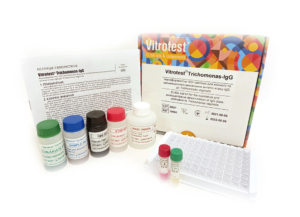
The test kit Vitrotest® Trichomonas-IgG is an enzyme linked immunosorbent assay (ELISA) for the qualitative and semiquantitative determination of IgG class antibodies to Trichomonas vaginalis in human serum or plasma.
Determination of IgG antibodies to Trichomonas vaginalis in the test kit Vitrotest® Trichomonas-IgG is based on a solid phase, indirect ELISA in a two-step incubation procedure.
○ ТК061 - 96 tests- Solid phase: breakable microplate ELISA is coated with Trichomonas vaginalis antigens.
- Conjugate: a monoclonal antibodies to human IgG conjugated to horseradish peroxidase.
- Chromogen: ready to use TMB solution.
- Volume of sample for analysis: 10 μl.
- Assay time: 1h 15 min.
The flagellated protozoan Trichomonas vaginalis is the etiologic agent of one of the most common sexually transmitted diseases in the world. On average, 25% of sexually active individuals are infected with T. vaginalis. According to the latest data, more than 170 million cases of trichomoniasis are reported worldwide each year.
In women, trichomonads cause acute and subacute vaginitis, with symptoms including frothy discharge, itching, and lower abdominal pain. The disease is cyclical – these symptoms subside during menstruation and pregnancy. During pregnancy, trichomoniasis can lead to premature birth and low birth weight in infants. In men, T. vaginalis typically causes urethritis, prostatitis, epididymitis, and dysuria. In most cases, the disease is asymptomatic. The mild symptoms in men are attributed to the flushing out of a significant portion of trichomonads from the urogenital tract during urination. The latent nature of the disease often leads to an underestimation of its spread. Chronic infection almost always results in chronic prostatitis. Trichomoniasis has also been associated with the development of prostate cancer in men.
Currently, the following laboratory methods are used to diagnose trichomoniasis:- microscopy of vaginal or cervical secretions in women and urinary tract secretions in men;
- culture of trichomonads;
- detection of pathogen DNA by polymerase chain reaction (PCR);
- detection of antibodies specific to T. vaginalis by enzyme-linked immunosorbent assay (ELISA).
According to several studies, the sensitivity of direct parasite detection methods ranges from 38% to 82%. It is also known that infected individuals develop a humoral, secretory, and cellular immune response to the parasite, which allows for the use of serological studies for diagnostic purposes. Antibodies to the trichomonad surface antigen p270 and α-actinin are produced in almost all infected individuals, and serum antibody levels correlate with active infection. Serological diagnostic methods are particularly valuable in individuals who do not exhibit clinical manifestations of trichomoniasis and in men who may be asymptomatic carriers of the parasite.