
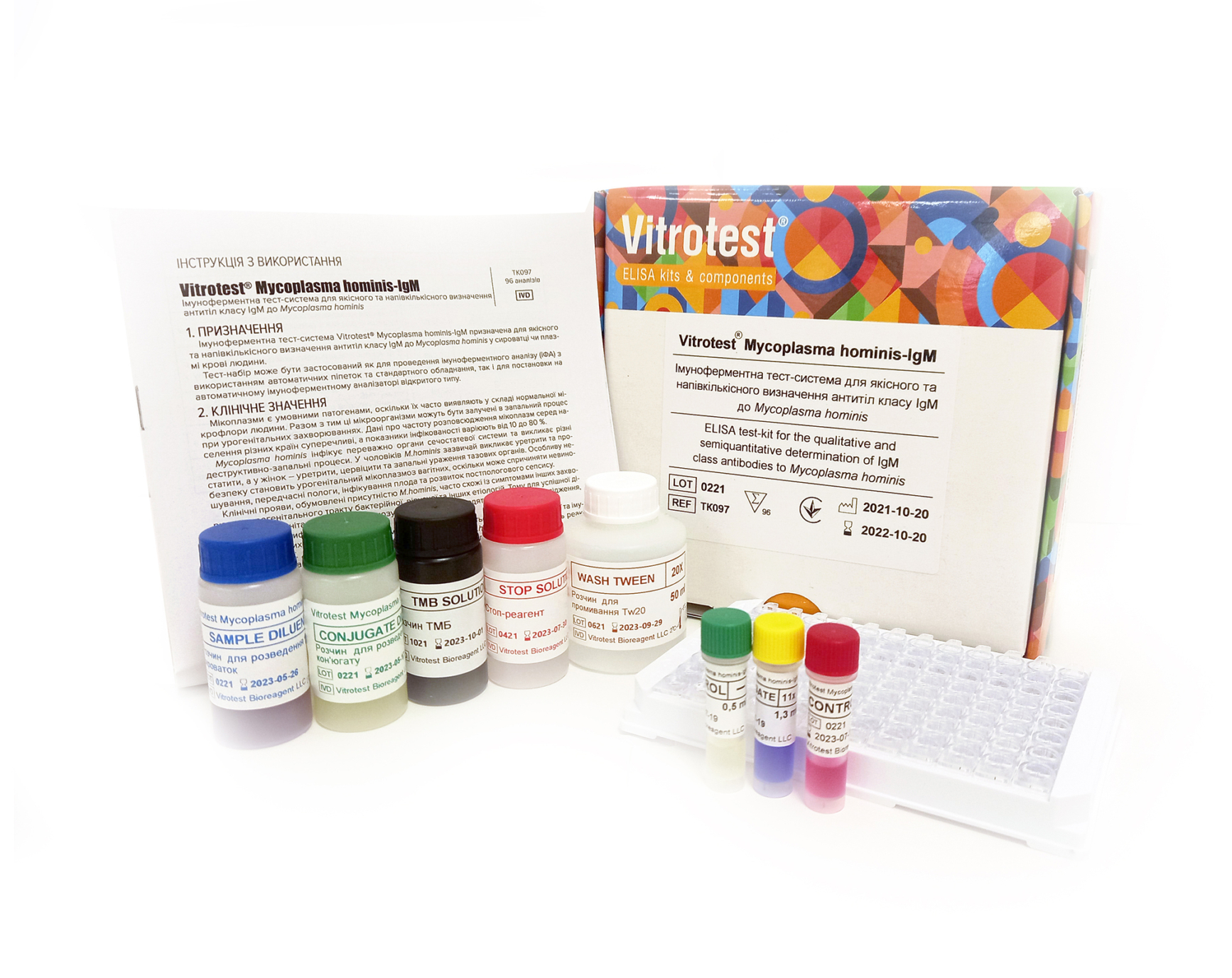
Determination of IgM antibodies to Mycoplasma hominis in the test kit Vitrotest® Mycoplasma hominis-IgM is based on a solid phase, «IgM-capture» ELISA in a two-step incubation procedure.
○ ТК097 – 96 tests
- Solid phase: breakable microplate ELISA is coated with monoclonal anti-IgM antibodies.
- Conjugate: recombinant M. hominis antigen, conjugated to horseradish peroxidase.
- Chromogen: ready to use TMB solution.
- Volume of sample for analysis: 10 μl.
- Assay time: 1h 30 min.
Mycoplasma hominis infects primarily the organs of the genitourinary system and causes various destructive inflammatory processes. In men, M. hominis usually causes urethritis and prostatitis, and in women is provokes urethritis, cervicitis and inflammatory lesions of the pelvic organs. Urogenital mycoplasmosis in pregnant women is especially dangerous, as it can cause miscarriage, premature birth, infection of the fetus and the development of postpartum sepsis.
Clinical manifestations caused by the presence of M. hominis are often similar to symptoms of other diseases of the urogenital tract of bacterial, viral and other etiologies. Therefore, for successful diagnosis of urogenital mycoplasmosis, laboratory tests are required to differentiate them.
Serological methods for diagnosing mycoplasmosis include precipitation and immunofluorescence reactions. To detect serum antibodies to M. hominis, a passive hemagglutination reaction and an enzyme-linked immunosorbent assay are used, which makes it possible to determine the stage and nature of the disease. This is especially important in chronic disease. The presence of IgG antibodies to M. hominis reflects the overall picture of the immune response as a result of prolonged or previous infection. In the latter case, IgG may remain at low levels for many years.