
-
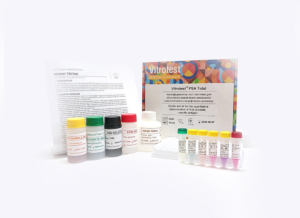
The test kit Vitrotest® PSA Total is an enzyme linked immunosorbent assay (ELISA) for the quantitative determination of total prostate-specific antigen (PSA) in human serum or plasma. Determination of concentration total PSA in the test kit Vitrotest® PSA Total is based on on a solid-phase "sandwich" ELISA. ○ ТК104 - 96 tests
- Solid phase: breakable microplate ELISA is coated with monoclonal antibodies specific to human PSA.
- Conjugate: a monoclonal antibodies to human PSA conjugated to horseradish peroxidase.
- Chromogen: ready to use TMB solution.
- Volume of sample for analysis: 10 μl.
- Assay time: 1h 15 min.
- Analytical sensitivity: 0,134 ng/ml.
- Linearity range: 0,25-30 ng/ml.
In developed countries, prostate cancer ranks second in mortality from malignant diseases among men. According to WHO data, in 2020, prostate cancer mortality in Ukraine reached 4,219 cases. A valuable biomarker for prostate cancer, which is now widely used for population screening, diagnosis, and monitoring of patients with prostate cancer, is the prostate-specific antigen (PSA). Screening for this tumor marker was introduced in the 1990s in the USA, Canada, Japan, and the UK, where a subsequent trend of decreased prostate cancer mortality has been observed. Prostate-specific antigen is a glycoprotein produced by the epithelial cells of the prostate gland, the urethral mucosa, and the Cowper’s glands. PSA is secreted into the seminal fluid, ensuring semen liquefaction, but is typically found in very low concentrations in the blood. In blood serum, PSA is present in various forms: complexed with α1-antichymotrypsin (70-90%), free PSA not bound to serum proteins (10-30%), and bound to alpha-2-macroglobulin. In men’s blood serum, the normal concentration of total PSA does not exceed 4 ng/ml. Elevated levels of this tumor marker may indicate a risk of prostate cancer. According to the American Cancer Society, the likelihood of prostate cancer with serum total PSA levels of 4-10 ng/ml is 25%, while with concentrations above 10 ng/ml, this figure approaches 50%. An increase in PSA levels can also be observed with prostate hypertrophy and prostatitis. Therefore, when elevated serum PSA levels are detected, a digital rectal examination (DRE) of the prostate is recommended to differentiate pathological conditions. For laboratory identification of prostate cancer, the measurement of total and free prostate-specific antigen in blood serum is used. When PSA concentration is in the range of 4 to 10 ng/ml, determining the percentage of free PSA can be helpful in deciding whether a prostate biopsy is necessary. Typically, a biopsy is recommended when the percentage of free PSA is below 10%, although some doctors consider a threshold level of 25%. The serum PSA level is an informative marker not only for screening patients for prostate cancer but also for monitoring treatment effectiveness and prognosis after surgical intervention. -
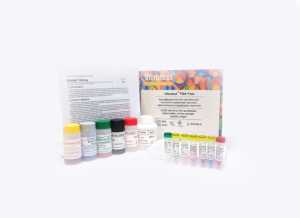
The test kit Vitrotest® PSA Free is an enzyme linked immunosorbent assay (ELISA) for the quantitative determination of free prostate-specific antigen (PSA) in human serum or plasma.
Determination of concentration free PSA in the test kit Vitrotest® PSA Free is based on on a solid-phase "sandwich" ELISA followed by the use of biotin-streptavidin interaction.
○ ТК105 - 96 tests- Solid phase: breakable microplate ELISA is coated with monoclonal antibodies specific to human PSA.
- Biotinylated anti-PSA antibody solution: biotinylated monoclonal antibodies to human PSA.
- Streptavidin-HRP conjugate: streptavidin solution conjugated with horseradish peroxidase.
- Chromogen: ready to use TMB solution.
- Volume of sample for analysis: 25 μl.
- Assay time: 1 hour.
- Analytical sensitivity: 0,096 ng/ml.
- Linearity range: 0,125-8 ng/ml.
In developed countries, prostate cancer ranks second in mortality from malignant diseases among men. According to WHO data, in 2020, prostate cancer mortality in Ukraine reached 4,219 cases.
A valuable biomarker for prostate cancer, which is now widely used for population screening, diagnosis, and monitoring of patients with prostate cancer, is the prostate-specific antigen (PSA). Screening for this tumor marker was introduced in the 1990s in the USA, Canada, Japan, and the UK, where a subsequent trend of decreased prostate cancer mortality has been observed.
Prostate-specific antigen is a glycoprotein produced by the epithelial cells of the prostate gland, the urethral mucosa, and the Cowper’s glands. PSA is secreted into the seminal fluid, ensuring semen liquefaction, but is typically found in very low concentrations in the blood. In blood serum, PSA is present in various forms: complexed with α1-antichymotrypsin (70-90%), free PSA not bound to serum proteins (10-30%), and bound to alpha-2-macroglobulin.
In men’s blood serum, the normal concentration of total PSA does not exceed 4 ng/ml. Elevated levels of this tumor marker may indicate a risk of prostate cancer. According to the American Cancer Society, the likelihood of prostate cancer with serum total PSA levels of 4-10 ng/ml is 25%, while with concentrations above 10 ng/ml, this figure approaches 50%. An increase in PSA levels can also be observed with prostate hypertrophy and prostatitis. Therefore, when elevated serum PSA levels are detected, a digital rectal examination (DRE) of the prostate is recommended to differentiate pathological conditions.
For laboratory identification of prostate cancer, the measurement of total and free prostate-specific antigen in blood serum is used. When PSA concentration is in the range of 4 to 10 ng/ml, determining the percentage of free PSA can be helpful in deciding whether a prostate biopsy is necessary. Typically, a biopsy is recommended when the percentage of free PSA is below 10%, although some doctors consider a threshold level of 25%.
The serum PSA level is an informative marker not only for screening patients for prostate cancer but also for monitoring treatment effectiveness and prognosis after surgical intervention. -
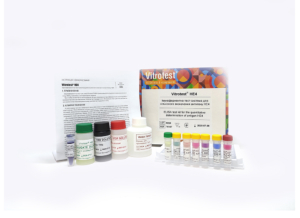
The test kit Vitrotest® HE4 is an enzyme linked immunosorbent assay (ELISA) for the quantitative determination of antigen HE4 in human serum or plasma. Determination of concentration antigen HE4 in the test kit Vitrotest® HE4 is based on a solid-phase “sandwich” ELISA. ○ ТК107 - 96 tests
- Solid phase: breakable microplate ELISA is coated with monoclonal antibodies specific to antigen HE4.
- Conjugate: a monoclonal antibodies to antigen HE4 conjugated to horseradish peroxidase.
- Chromogen: ready to use TMB solution.
- Volume of sample for analysis: 10 μl.
- Assay time: 1h 15 min.
- Analytical sensitivity: 4,85 pmol/l.
- Linearity range: 25-1000 pmol/l.
Ovarian cancer ranks as the second leading cause of cancer-related deaths among women worldwide. Only about 20% of ovarian cancer cases are detected at an early stage. When ovarian cancer is diagnosed at an early stage, approximately 94% of patients survive longer than five years after diagnosis. However, more than 70% of cases are diagnosed at an advanced stage, which significantly worsens the prognosis. For the detection of ovarian cancer in patients without symptoms, two screening tests are most commonly used: transvaginal ultrasound and a blood test for the CA125 tumor marker. However, elevated CA125 levels can be found in 1-2% of healthy women and in patients with other conditions and diseases, including the first trimester of pregnancy, menstruation, endometriosis, uterine fibroids, acute salpingitis, liver disease, and peritonitis. To improve the sensitivity and specificity of laboratory diagnostic tools in patients with benign tumors, the combined determination of serum levels of two tumor markers, CA125 and HE4, is currently used. HE4 (Human Epididymis Protein 4) is a secretory low-molecular-weight glycoprotein predominantly expressed in the epithelial cells of the fallopian tube, as well as normally in the epithelium of the mammary glands, reproductive system organs, intestines, and lungs. Although the physiological functions of this protein have not been fully studied, overexpression of HE4 is observed in serous and endometrioid ovarian carcinomas. Elevated levels of this tumor marker are found both in the early stages of ovarian cancer and in endometrial cancer. Unlike CA125, HE4 levels do not increase in endometriosis, benign gynecological diseases, or ovarian cysts. The serum level of HE4 is an informative marker not only for screening patients for ovarian cancer but also as an important prognostic marker. High concentrations of HE4 in plasma are an independent preoperative marker of poor prognosis for ovarian cancer patients. To improve the assessment of laboratory tests, the Risk of Ovarian Malignancy Algorithm (ROMA) was developed, which is a mathematical model that analyzes HE4 in combination with CA125, taking into account the patient’s menopausal status. The ROMA algorithm allows for a high probability of distinguishing malignant tumors from benign neoplasms in postmenopausal women.
-
The test kit Vitrotest® PSA Total is an enzyme linked immunosorbent assay (ELISA) for the quantitative determination of total prostate-specific antigen (PSA) in human serum or plasma. Determination of concentration total PSA in the test kit Vitrotest® PSA Total is based on on a solid-phase "sandwich" ELISA. ○ ТК104 - 96 tests
- Solid phase: breakable microplate ELISA is coated with monoclonal antibodies specific to human PSA.
- Conjugate: a monoclonal antibodies to human PSA conjugated to horseradish peroxidase.
- Chromogen: ready to use TMB solution.
- Volume of sample for analysis: 10 μl.
- Assay time: 1h 15 min.
- Analytical sensitivity: 0,134 ng/ml.
- Linearity range: 0,25-30 ng/ml.
In developed countries, prostate cancer ranks second in mortality from malignant diseases among men. According to WHO data, in 2020, prostate cancer mortality in Ukraine reached 4,219 cases. A valuable biomarker for prostate cancer, which is now widely used for population screening, diagnosis, and monitoring of patients with prostate cancer, is the prostate-specific antigen (PSA). Screening for this tumor marker was introduced in the 1990s in the USA, Canada, Japan, and the UK, where a subsequent trend of decreased prostate cancer mortality has been observed. Prostate-specific antigen is a glycoprotein produced by the epithelial cells of the prostate gland, the urethral mucosa, and the Cowper’s glands. PSA is secreted into the seminal fluid, ensuring semen liquefaction, but is typically found in very low concentrations in the blood. In blood serum, PSA is present in various forms: complexed with α1-antichymotrypsin (70-90%), free PSA not bound to serum proteins (10-30%), and bound to alpha-2-macroglobulin. In men’s blood serum, the normal concentration of total PSA does not exceed 4 ng/ml. Elevated levels of this tumor marker may indicate a risk of prostate cancer. According to the American Cancer Society, the likelihood of prostate cancer with serum total PSA levels of 4-10 ng/ml is 25%, while with concentrations above 10 ng/ml, this figure approaches 50%. An increase in PSA levels can also be observed with prostate hypertrophy and prostatitis. Therefore, when elevated serum PSA levels are detected, a digital rectal examination (DRE) of the prostate is recommended to differentiate pathological conditions. For laboratory identification of prostate cancer, the measurement of total and free prostate-specific antigen in blood serum is used. When PSA concentration is in the range of 4 to 10 ng/ml, determining the percentage of free PSA can be helpful in deciding whether a prostate biopsy is necessary. Typically, a biopsy is recommended when the percentage of free PSA is below 10%, although some doctors consider a threshold level of 25%. The serum PSA level is an informative marker not only for screening patients for prostate cancer but also for monitoring treatment effectiveness and prognosis after surgical intervention. -
The test kit Vitrotest® PSA Free is an enzyme linked immunosorbent assay (ELISA) for the quantitative determination of free prostate-specific antigen (PSA) in human serum or plasma.
Determination of concentration free PSA in the test kit Vitrotest® PSA Free is based on on a solid-phase "sandwich" ELISA followed by the use of biotin-streptavidin interaction.
○ ТК105 - 96 tests- Solid phase: breakable microplate ELISA is coated with monoclonal antibodies specific to human PSA.
- Biotinylated anti-PSA antibody solution: biotinylated monoclonal antibodies to human PSA.
- Streptavidin-HRP conjugate: streptavidin solution conjugated with horseradish peroxidase.
- Chromogen: ready to use TMB solution.
- Volume of sample for analysis: 25 μl.
- Assay time: 1 hour.
- Analytical sensitivity: 0,096 ng/ml.
- Linearity range: 0,125-8 ng/ml.
In developed countries, prostate cancer ranks second in mortality from malignant diseases among men. According to WHO data, in 2020, prostate cancer mortality in Ukraine reached 4,219 cases.
A valuable biomarker for prostate cancer, which is now widely used for population screening, diagnosis, and monitoring of patients with prostate cancer, is the prostate-specific antigen (PSA). Screening for this tumor marker was introduced in the 1990s in the USA, Canada, Japan, and the UK, where a subsequent trend of decreased prostate cancer mortality has been observed.
Prostate-specific antigen is a glycoprotein produced by the epithelial cells of the prostate gland, the urethral mucosa, and the Cowper’s glands. PSA is secreted into the seminal fluid, ensuring semen liquefaction, but is typically found in very low concentrations in the blood. In blood serum, PSA is present in various forms: complexed with α1-antichymotrypsin (70-90%), free PSA not bound to serum proteins (10-30%), and bound to alpha-2-macroglobulin.
In men’s blood serum, the normal concentration of total PSA does not exceed 4 ng/ml. Elevated levels of this tumor marker may indicate a risk of prostate cancer. According to the American Cancer Society, the likelihood of prostate cancer with serum total PSA levels of 4-10 ng/ml is 25%, while with concentrations above 10 ng/ml, this figure approaches 50%. An increase in PSA levels can also be observed with prostate hypertrophy and prostatitis. Therefore, when elevated serum PSA levels are detected, a digital rectal examination (DRE) of the prostate is recommended to differentiate pathological conditions.
For laboratory identification of prostate cancer, the measurement of total and free prostate-specific antigen in blood serum is used. When PSA concentration is in the range of 4 to 10 ng/ml, determining the percentage of free PSA can be helpful in deciding whether a prostate biopsy is necessary. Typically, a biopsy is recommended when the percentage of free PSA is below 10%, although some doctors consider a threshold level of 25%.
The serum PSA level is an informative marker not only for screening patients for prostate cancer but also for monitoring treatment effectiveness and prognosis after surgical intervention. -
The test kit Vitrotest® HE4 is an enzyme linked immunosorbent assay (ELISA) for the quantitative determination of antigen HE4 in human serum or plasma. Determination of concentration antigen HE4 in the test kit Vitrotest® HE4 is based on a solid-phase “sandwich” ELISA. ○ ТК107 - 96 tests
- Solid phase: breakable microplate ELISA is coated with monoclonal antibodies specific to antigen HE4.
- Conjugate: a monoclonal antibodies to antigen HE4 conjugated to horseradish peroxidase.
- Chromogen: ready to use TMB solution.
- Volume of sample for analysis: 10 μl.
- Assay time: 1h 15 min.
- Analytical sensitivity: 4,85 pmol/l.
- Linearity range: 25-1000 pmol/l.
Ovarian cancer ranks as the second leading cause of cancer-related deaths among women worldwide. Only about 20% of ovarian cancer cases are detected at an early stage. When ovarian cancer is diagnosed at an early stage, approximately 94% of patients survive longer than five years after diagnosis. However, more than 70% of cases are diagnosed at an advanced stage, which significantly worsens the prognosis. For the detection of ovarian cancer in patients without symptoms, two screening tests are most commonly used: transvaginal ultrasound and a blood test for the CA125 tumor marker. However, elevated CA125 levels can be found in 1-2% of healthy women and in patients with other conditions and diseases, including the first trimester of pregnancy, menstruation, endometriosis, uterine fibroids, acute salpingitis, liver disease, and peritonitis. To improve the sensitivity and specificity of laboratory diagnostic tools in patients with benign tumors, the combined determination of serum levels of two tumor markers, CA125 and HE4, is currently used. HE4 (Human Epididymis Protein 4) is a secretory low-molecular-weight glycoprotein predominantly expressed in the epithelial cells of the fallopian tube, as well as normally in the epithelium of the mammary glands, reproductive system organs, intestines, and lungs. Although the physiological functions of this protein have not been fully studied, overexpression of HE4 is observed in serous and endometrioid ovarian carcinomas. Elevated levels of this tumor marker are found both in the early stages of ovarian cancer and in endometrial cancer. Unlike CA125, HE4 levels do not increase in endometriosis, benign gynecological diseases, or ovarian cysts. The serum level of HE4 is an informative marker not only for screening patients for ovarian cancer but also as an important prognostic marker. High concentrations of HE4 in plasma are an independent preoperative marker of poor prognosis for ovarian cancer patients. To improve the assessment of laboratory tests, the Risk of Ovarian Malignancy Algorithm (ROMA) was developed, which is a mathematical model that analyzes HE4 in combination with CA125, taking into account the patient’s menopausal status. The ROMA algorithm allows for a high probability of distinguishing malignant tumors from benign neoplasms in postmenopausal women.