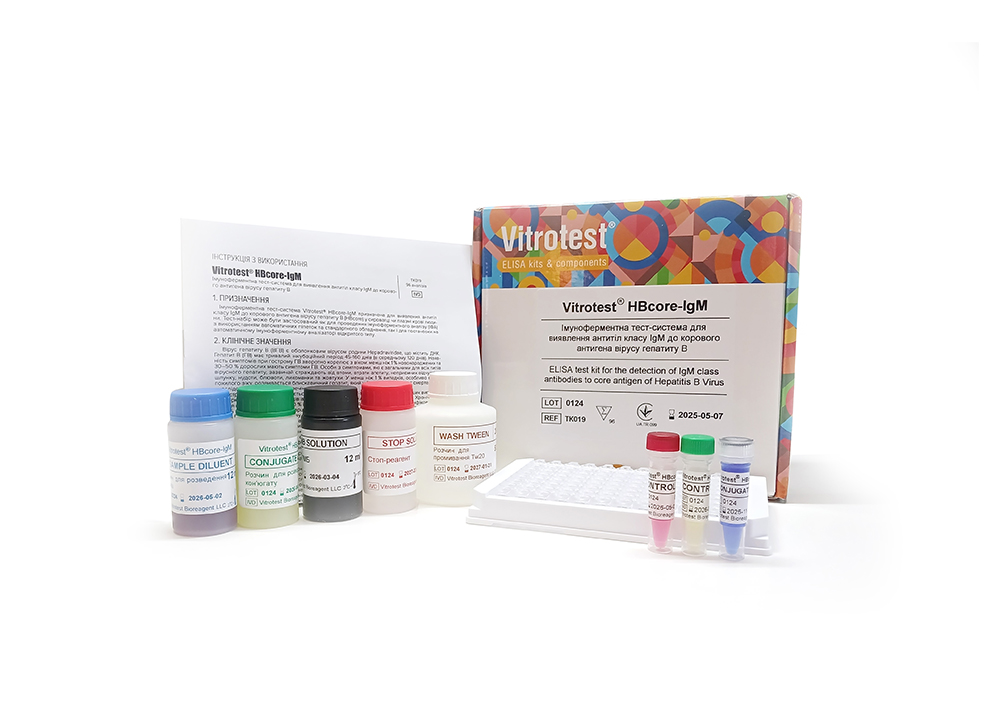
Detection of IgM class antibodies to the core antigen of the Hepatitis B Virus in the test kit Vitrotest® HBcore-IgM is based on the principle of “IgM-capture” of solid-phase ELISA in two-stage incubation.
○ TK019 – 96 tests
○ TK143 – 192 tests
- Solid phase: microplate ELISA is coated with monoclonal antibodies specific for human immunoglobulin M.
- Conjugate: HBcore recombinant antigen conjugated with horseradish peroxidase.
- Chromogen: ready to use TMB solution.
- Volume of sample for analysis: 10 μl.
- Assay time: 1.5 hours.
Hepatitis B (HB) has a long incubation period of 45 to 160 days (average: 120 days). The length of incubation period is related to the amount of virus in the inoculum, the mode of transmission and host factors.
The appearance of symptoms under acute HB is inversely related to age: less than 1% of newborns and 30%–50% adults develop symptoms. Those who do get symptoms, which are similar for all types of viral hepatitis, usually suffer from tiredness, loss of appetite, abdominal discomfort, nausea, vomiting, fever and jaundice. In less then 1 % of cases, especially in the elderly, fulminating HB develops, which is mostly fatal due to acute hepatic necrosis.
The acute HB often resolves spontaneously after a 4-8 week illness. Otherwise, the infection can last for six months or more. This condition is known as chronic HB.
More than 90 % of infected infants, 25–50 % of children infected between 1 and 5 years of age, and 6–10 % of acutely infected older children and adults develop chronic infection. As a result, more than 350 million people in the world today are estimated to be persistently infected with HBV.
In a considerable number of patients, chronic HB may lead to liver cirrhosis and hepatocellular carcinoma. Cirrhosis affects around one in five people with chronic hepatitis B. Of all causes of cirrhosis, approximately one third can be attributed to chronic HBV infection.
Transmission occurs by percutaneous and permucosal (through broken skin) exposure to such infective body fluids as blood, vaginal and menstrual fluids, and semen. The main ways of transmission include: vertical – from an infected mother during delivery (rate of transmission around 50%); sexual; horizontal – household contact with an infected person (for example, contact of infected blood with cutaneous scratches), sharing of contaminated injection drug equipment by injection drug users, or unhygienic injection procedures in health-care institutions.

