Skip to content
  • Home
  • About us
  • Products
    ELISA kit
    • HIV infection
    • Viral Hepatitis
    • Syphilis
    • Herpes Infections
    • TORCH Infections
    • Vaccine-Preventable Diseases
    • Сovid-19COVID-19 is an infectious disease caused by a new SARS-CoV-2 coronavirus which had not previously been detected in humans. The viral infection leads to the development of a respiratory flu-like disease with symptoms such as cough and fever. In more severe cases pneumonia can develop. The average incubation period of the COVID-19 is 6.5 days, but it can range from 3 to 21 days. SARS-CoV-2 is an RNA-virus with a specific envelope with spikes in the form of a “corona”. The main structural proteins of the virus include envelope protein (E), membrane protein (M), spike (S) glycoprotein, and nucleocapsid (N) protein. S protein on the surface of the SARS-CoV-2 virion mediates the receptor recognition and cell membrane fusion with ACE2 molecules, which are mainly expressed on type II pneumocytes, colon and kidney epithelial cells. It contains three fragments, namely the ectodomain, the transmembrane domain and the short intracellular segment. The ectodomain consists of a receptor-binding subunit S1 containing the RBD domain and a fusion subunit (S2). During viral infection, S1 C-terminal domain binds to the extracellular peptidase (PD) domain of ACE2 to ensure that the virus attaches to the surface of the target cell. The S1 N-terminal domain binds to…
    • Borreliosis
    • Parasites
    • Urogenital Infections
    • Gastroenteric Diseases
    • Tumor Markers
    • Metabolism
    • Allergy
    • Biotinylated Allergens
    • Thyroid function
    • Brucellosis
    Download catalog ELISA kits
    IMMUNOGLOBULINS LEVEL
    Raw materials
    DOWNLOAD CATALOG RAW MATERIALS
  • News
  • Contact
  • EN
  • UA
  • RU
  • Home
  • About us
  • Products
    • ELISA kits
      • HIV infection
      • Parasites
      • Syphilis
      • Borreliosis
      • Viral Hepatitis
      • TORCH Infections
      • Herpes Infections
      • Vaccine-Preventable Diseases
      • Сovid-19COVID-19 is an infectious disease caused by a new SARS-CoV-2 coronavirus which had not previously been detected in humans. The viral infection leads to the development of a respiratory flu-like disease with symptoms such as cough and fever. In more severe cases pneumonia can develop. The average incubation period of the COVID-19 is 6.5 days, but it can range from 3 to 21 days. SARS-CoV-2 is an RNA-virus with a specific envelope with spikes in the form of a “corona”. The main structural proteins of the virus include envelope protein (E), membrane protein (M), spike (S) glycoprotein, and nucleocapsid (N) protein. S protein on the surface of the SARS-CoV-2 virion mediates the receptor recognition and cell membrane fusion with ACE2 molecules, which are mainly expressed on type II pneumocytes, colon and kidney epithelial cells. It contains three fragments, namely the ectodomain, the transmembrane domain and the short intracellular segment. The ectodomain consists of a receptor-binding subunit S1 containing the RBD domain and a fusion subunit (S2). During viral infection, S1 C-terminal domain binds to the extracellular peptidase (PD) domain of ACE2 to ensure that the virus attaches to the surface of the target cell. The S1 N-terminal domain binds to…
      • Urogenital Infections
      • Gastroenteric Diseases
      • Tumor Markers
      • Metabolism
      • Allergy
      • Biotinylated Allergens
      • Thyroid function
    • IMMUNOGLOBULINS LEVEL
    • RAW MATERIALS
    • DOWNLOAD CATALOG ELISA
    • DOWNLOAD CATALOG RAW MATERIALS
  • News
  • Contact
  • EN
    • EN
    • UA
    • RU
  • DOWNLOAD CATALOG ELISA
  • Home
  • About us
  • Products
    • ELISA kits
      • HIV infection
      • Parasites
      • Syphilis
      • Borreliosis
      • Viral Hepatitis
      • TORCH Infections
      • Herpes Infections
      • Vaccine-Preventable Diseases
      • Сovid-19COVID-19 is an infectious disease caused by a new SARS-CoV-2 coronavirus which had not previously been detected in humans. The viral infection leads to the development of a respiratory flu-like disease with symptoms such as cough and fever. In more severe cases pneumonia can develop. The average incubation period of the COVID-19 is 6.5 days, but it can range from 3 to 21 days. SARS-CoV-2 is an RNA-virus with a specific envelope with spikes in the form of a “corona”. The main structural proteins of the virus include envelope protein (E), membrane protein (M), spike (S) glycoprotein, and nucleocapsid (N) protein. S protein on the surface of the SARS-CoV-2 virion mediates the receptor recognition and cell membrane fusion with ACE2 molecules, which are mainly expressed on type II pneumocytes, colon and kidney epithelial cells. It contains three fragments, namely the ectodomain, the transmembrane domain and the short intracellular segment. The ectodomain consists of a receptor-binding subunit S1 containing the RBD domain and a fusion subunit (S2). During viral infection, S1 C-terminal domain binds to the extracellular peptidase (PD) domain of ACE2 to ensure that the virus attaches to the surface of the target cell. The S1 N-terminal domain binds to…
      • Urogenital Infections
      • Gastroenteric Diseases
      • Tumor Markers
      • Metabolism
      • Allergy
      • Biotinylated Allergens
      • Thyroid function
    • IMMUNOGLOBULINS LEVEL
    • RAW MATERIALS
    • DOWNLOAD CATALOG ELISA
    • DOWNLOAD CATALOG RAW MATERIALS
  • News
  • Contact
  • EN
    • EN
    • UA
    • RU
  • DOWNLOAD CATALOG ELISA

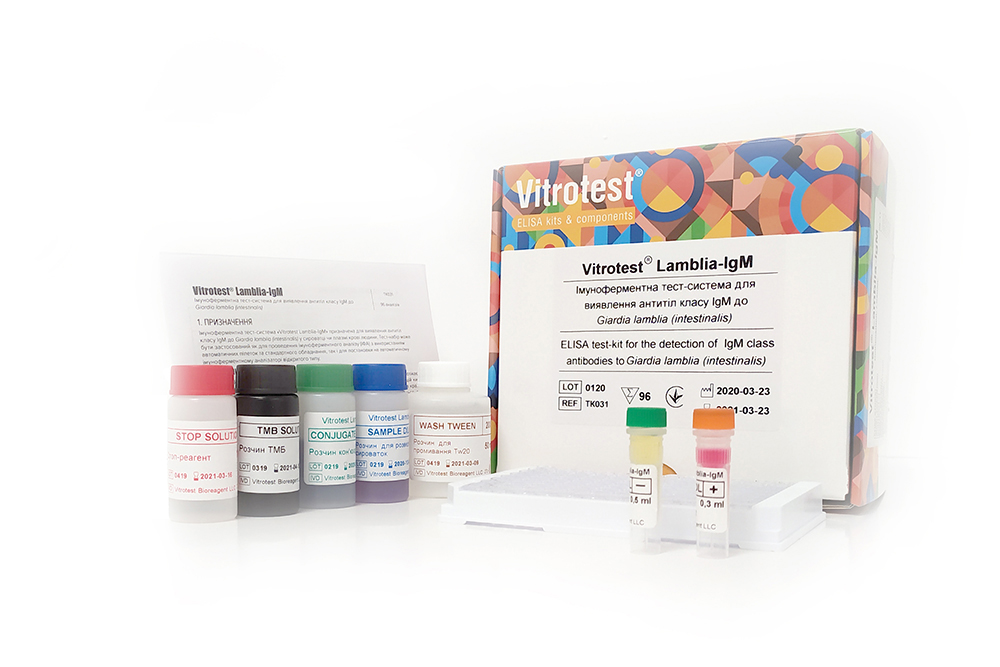
Vitrotest® Lamblia-IgM

  • Description

  • Features

  • Giardiasis

  • Description

The test kit Vitrotest® Lamblia-IgM is an enzyme linked immunosorbent assay (ELISA) for the detection of IgM class antibodies to Giardia lamblia (intestinalis) in human serum or plasma.

Determination of IgM antibodies to Giardia lamblia in the test kit Vitrotest® Lamblia-IgM is based on a solid phase, indirect ELISA in a two-step incubation procedure.

○ ТК031 – 96 tests

  • Features

  • Solid phase: breakable microplate ELISA is coated Giardia lamblia purified antigens.
  • Conjugate: a monoclonal antibodies to human IgM conjugated to horseradish peroxidase.
  • Chromogen: ready to use TMB solution.
  • Volume of sample for analysis 10 μl.
  • Assay time: 1h 15 min.

  • Giardiasis

Giardia lamblia (intestinalis) causes giardiasis, a parasitic infestation that can manifest as latent parasitic carriage or in more pronounced forms, such as intestinal dysfunction. Giardiasis has been recorded on all five continents and in most countries worldwide. Infection rates vary from less than 1% to 50%. In many developing countries, where basic sanitary conditions are lacking, infection with Giardia in children by the age of 2 is almost universal. In contrast, in developed countries, the infection rate of G.lamblia is only 3–7%. The disease affects all age groups, but preschool-aged children are the most affected demographic.

The primary route of transmission for G.lamblia is fecal-oral. The parasite has a simple two-stage life cycle. After the host ingests cysts, they release trophozoites in the duodenum, which then attach to the mucosal lining of the small intestine.

Trophozoites exist only on the surface of the mucosa in the upper part of the small intestine. Therefore, Giardia mechanically blocks the mucosa and disrupts membrane digestion and the motor activity of the small intestine. Giardia impairs the absorption of fats, carbohydrates, vitamins C and B12, and leads to secondary bacterial infections. Symptoms of giardiasis can include diarrhea, fatigue, bloating, apathy, weight loss, decreased appetite, pallor, and muscle twitching. From the gastrointestinal tract perspective, giardiasis mainly manifests as enterocolitis with catarrhal symptoms.

Numerous findings indicate the role of the humoral immune response in the elimination of G.lamblia. As shown in an experimental human infection model, IgM antibody levels significantly increased on days 14-21 post-infection and gradually declined following therapy. In contrast, IgG antibody levels remained elevated after successful treatment. The dynamics of IgA levels were similar to those of IgM.

The diagnosis of giardiasis is based on clinical history, symptoms, and the presence of cysts in fecal samples or trophozoites in material obtained from the small intestine during duodenal aspiration or duodenal biopsy. Alternative methods include the detection of G.lamblia antigen in feces and the determination of specific antibodies against Giardia in the patient’s serum. Serological testing is considered a valuable adjunct in the diagnosis of giardiasis. In addition to aiding in diagnosis, it can be useful for assessing the patient’s immune response and for epidemiological studies.

ELISA kits, Gastroenteric Diseases

tel./fax: +380972227672, +380442227672 | e-mail: info@vitrotest.ua, order@vitrotest.ua

© Vitrotest 2006 - 2026 | All Rights Reserved | Privacy policy | Terms of use

Page load link
Go to Top